
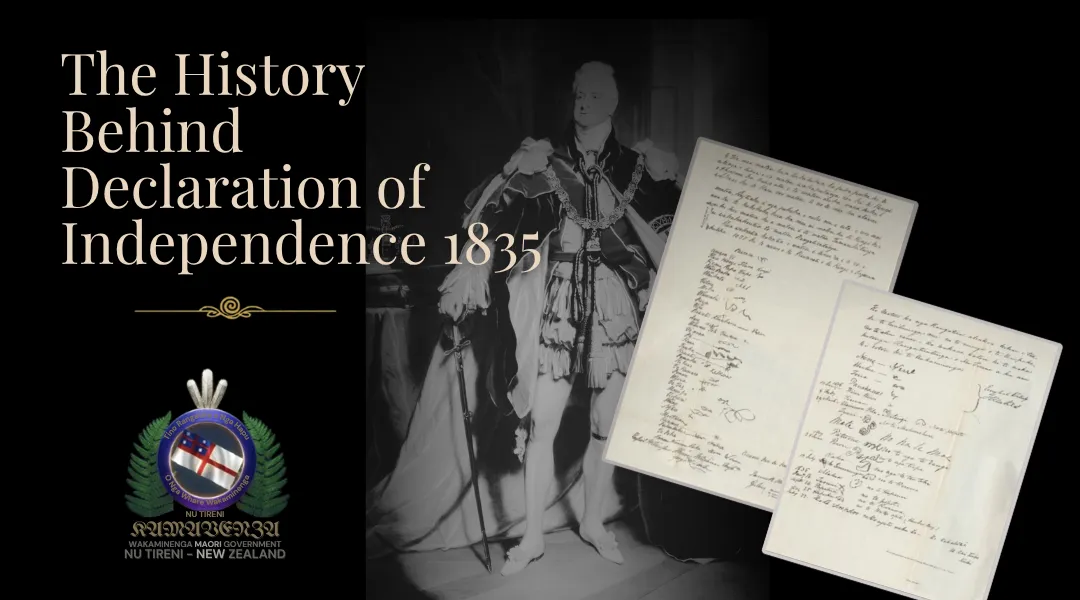
The History Behind the Declaration of Independence 1835
On 28 October 1835, Māori rangatira gathered at Waitangi to sign He Whakaputanga o te Rangatiratanga o Nu Tireni, the Declaration of Independence.
This significant historical document affirmed the independence and authority of the rangatira and established Te Wakaminenga o Ngā Hapū o Nu Tireni, the United Tribes of New Zealand.
The Declaration was subsequently acknowledged by the British Crown in 1836, during the reign of King William IV.
Today, He Whakaputanga remains an important part of Aotearoa New Zealand's history, contributing to ongoing discussions about rangatiratanga, governance and the relationship between Māori and the Crown.
For Wakameninga Māori Government, He Whakaputanga forms an important part of the organisation's understanding of its historical foundations and its commitment to community participation.
Through education, connection and engagement, WMG seeks to encourage greater understanding of this history and its significance for present and future generations.
This document presents Wakameninga Māori Government's historical perspectives and interpretations of He Whakaputanga and its significance today.



Privacy | Terms & Conditions
© Wakamenga Maori Government